
It usually starts with a feeling. The kitchen that was fine for a couple feels cramped now that there are children. The neighborhood you love has a house that no longer fits how you live. A parent is getting older and the guest room is too far from the bathroom and too far from anyone who could help. Something about the home has fallen out of step with the life you’re living in it.
What follows is one of the most consequential decisions a homeowner makes: do you stay and invest in what you have, or do you sell and start over somewhere new?
It’s a question with real financial stakes, real emotional weight, and no universal right answer. What it does have is a clear set of considerations and working through them honestly before you call a real estate agent or a contractor, is almost always worth the time.
When Moving Makes Sense
There are circumstances where moving is genuinely the better path, and it’s worth naming them rather than assuming remodeling is always the answer.
Location is the most obvious. If your neighborhood no longer fits your life — the school district has changed, your commute has become unsustainable, you want to be closer to aging parents or a different community — no remodel changes that. The house can be transformed; the address can’t. If location is the core of what isn’t working, the honest conclusion is that you’re not solving a home problem. You’re solving a geography problem.
The same logic applies when a home’s fundamental structure limits what’s possible. Some properties simply can’t expand in the ways a family needs, like a lot that doesn’t support an addition or a floor plan so constrained that reconfiguration would cost more than the home is worth. In those cases, moving may offer better value than investing in a property that has reached the ceiling of what it can become.
And sometimes the math just works out differently. In certain market conditions, like when inventory is high, interest rates are manageable, and comparable homes offer meaningfully more space or better location, buying can be the cleaner financial decision. This is worth calculating carefully, not assuming.
When Remodeling Makes More Sense
The calculation most homeowners run when considering a move tends to undercount the true cost of buying a new home. The purchase price is visible. But things like agent commissions, transfer taxes, closing costs, moving expenses, and new furniture are easy to underestimate. In the greater Philadelphia market, those costs can run well into five figures before you’ve changed a single thing about the new house.
There’s also the less quantifiable cost of starting over in a space that isn’t yours yet. A house that’s been lived in and loved for years has been subtly shaped to fit the people in it. Moving trades all of that for potential, which has real value but isn’t guaranteed.
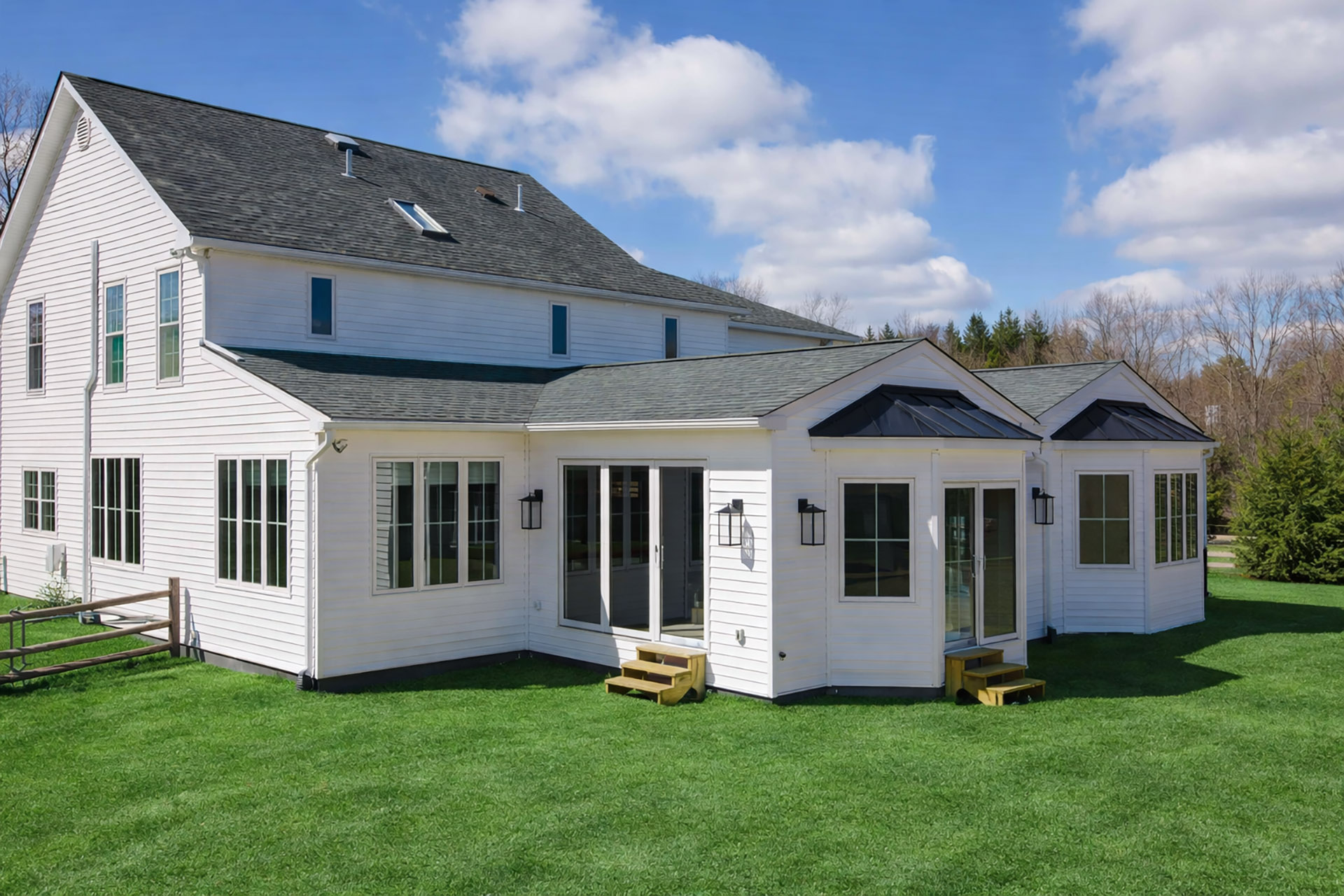
Remodeling, by contrast, lets you direct investment toward the specific problems that are making your home feel wrong. A kitchen that opens to the living space. A primary suite that finally functions as a retreat. A basement that becomes usable living space rather than storage overflow. An addition that accommodates a parent or a growing family without uprooting anyone. These are solvable problems — and when the underlying home and location are right, solving them is almost always more efficient than buying new.
The Equity Question
One of the most overlooked aspects of the remodel vs. move conversation is what you’re doing with the equity you’ve built. Homeowners who have owned in Bucks County, Montgomery County, or the Philadelphia suburbs for a decade or more have likely seen meaningful appreciation in their home’s value. That equity can either move with you into a new purchase at today’s prices, with today’s costs, or it can be reinvested into improving the home you already own.
For many homeowners, especially those with low-rate mortgages established in prior years, the financial case for staying and remodeling has become considerably more compelling. Giving up a 3% mortgage to finance a more expensive home at current rates can add thousands of dollars a month to costs — money that, in many scenarios, would be better spent on a well-planned remodel that solves the specific problems driving the conversation in the first place.
This isn’t an argument that remodeling is always the financially superior choice. It’s an argument that the full financial picture is often more nuanced than a simple comparison of purchase price to remodel budget, and that it’s worth understanding the big picture before deciding.

What Remodeling Can (and Can't) Solve
A well-executed remodel can transform how a home feels, functions, and serves a family. It can add space, reconfigure layouts, modernize systems, improve energy efficiency, and create rooms that hadn’t previously existed. What it cannot do is change the lot, the neighborhood, the school district, or the fundamental position of the home in the world.
This distinction is worth sitting with before any decision is made. The homeowners who are happiest after a remodel are almost always the ones who were solving a home problem like space, layout, function, condition, rather than a life problem that the home happened to be adjacent to. If the restlessness is about wanting a different chapter, a new neighborhood, a fresh start, a remodel may quiet that feeling for a while but is unlikely to resolve it.
Conversely, the homeowners who regret moving often describe the same thing: they loved the neighborhood, they loved their community, they had built something there and they moved because the house felt wrong, not the life. In many cases, a remodel would have been the better answer.
A Framework for Making a Decision
Rather than approaching this as a financial optimization problem, it’s often more useful to work through a few honest questions before letting the numbers do their work.

What specifically isn’t working about your home right now? Can you name it precisely? If the answer is concrete — the kitchen is too small, there’s no first-floor bedroom for a parent, the primary bath hasn’t been updated since the house was built — those are design-build problems with real solutions. If the answer is more abstract — it just doesn’t feel right anymore, I want something different, I’m tired of it — that’s worth examining before investing either in a renovation or a move.
If your home had exactly the space and layout you needed, would you want to stay? This is perhaps the most important question in the conversation. If the honest answer is yes, you’re facing a home problem. If the honest answer is no, you’re facing a life problem and the most important thing you can do is be clear about which one you’re solving.
The LBK Way: Starting the Conversation
At LBK Design Build, we talk with homeowners who are working through exactly this question all the time. Some come to us having already decided to remodel and wanting to understand what’s possible. Others are genuinely undecided and want a clear-eyed perspective on whether their home can become what they need it to be and what that would cost before they make any decision.
That second kind of conversation is one we welcome just as much as the first. Understanding what a remodel could accomplish, at what investment level, gives you real information to weigh against the alternative. It’s the kind of clarity that makes a consequential decision feel less like a leap and more like a choice.