
The first week of a remodel has its own energy. There’s a crew in the house, something is visibly happening, and the demo feels almost exciting. The last week carries its own momentum — decisions getting resolved, finishes going in, and the shape of the finished room becoming clear. What catches most homeowners off guard is the long middle: the dust has settled into everything, the kitchen has been a plywood box for three weeks, and the end still feels abstract.
Every contractor will tell you remodeling is disruptive. What they mean, and what’s harder to fully understand until you’re in it, is that remodeling is disruptive in specific, daily, accumulating ways. The families who get through it best are the ones who went in with a clear picture of what to expect, and a plan for each part of it.
What It Actually Feels Like
The physical experience of living through a remodel is one part noise, one part dust, one part rearranged routine, and one part decision fatigue– and those parts don’t distribute evenly across the project.
Demo week tends to be the loudest and the most visually dramatic. Walls come down, things are carried out, and the scope of what’s happening becomes suddenly, concretely real. It can be exciting. It can also be unsettling in a way that’s hard to anticipate. There’s something about watching a room opened up to its bones that makes the project feel simultaneously more consequential and less certain than it did on paper.
The rough construction phase that follows is slower and less legible. Framing, plumbing, electrical, HVAC — the work that has to happen before anything looks better. For homeowners who are watching closely, this is the phase that most often produces anxiety, because progress is real but invisible. The room looks like a construction site and it will look like a construction site for a while.
Finish work — tile, cabinetry, countertops, fixtures — is when the room begins to reveal itself, and for most homeowners this is where the emotional tenor of the project shifts. Decisions that were abstract on a sample board become real in the room. The palette comes together. The space starts to look like the thing you imagined. That shift in momentum tends to carry people through the final sprint.
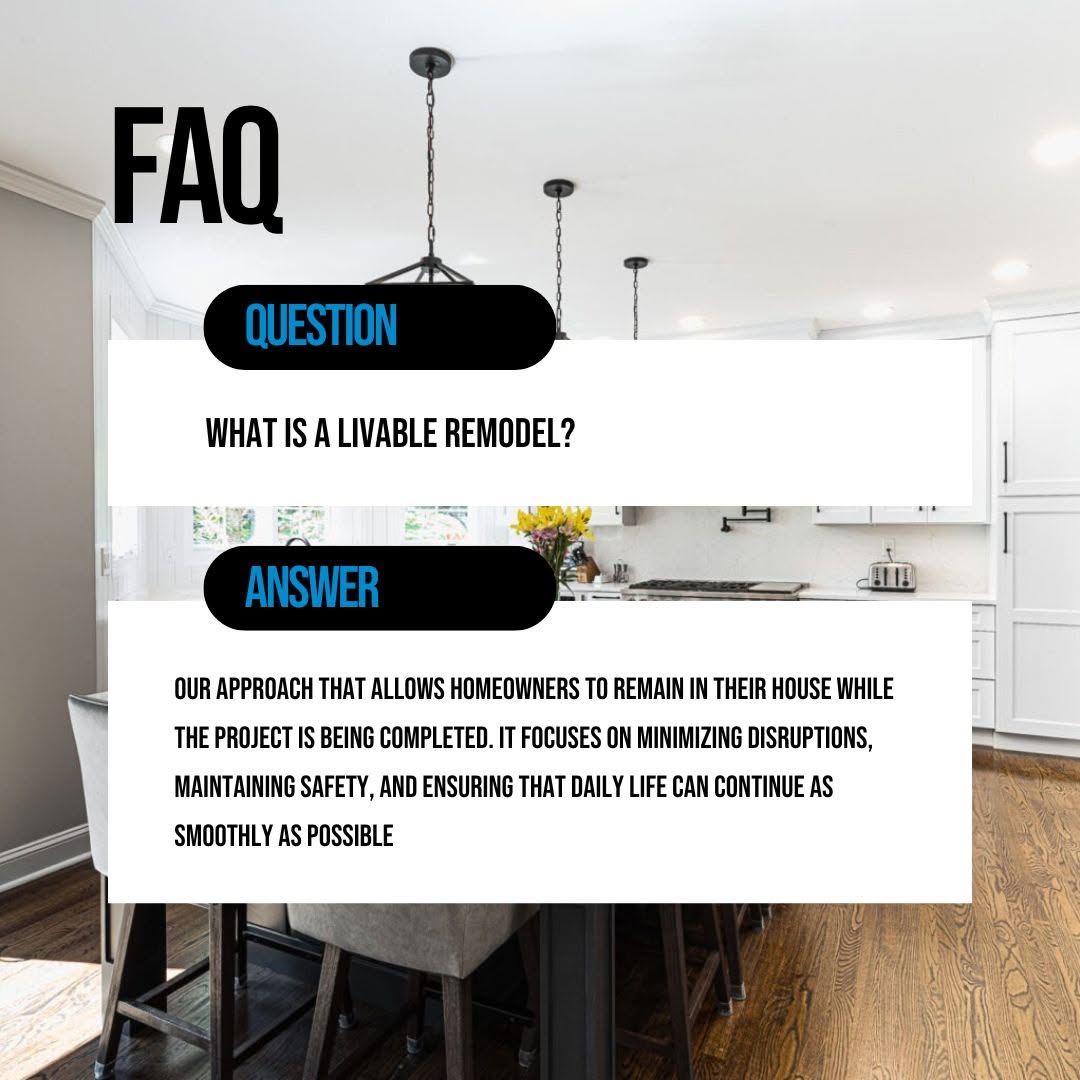
LBK practices Livable Remodeling so you can live your daily life with minimal disruption.
What Surprises Even Prepared Homeowners?
Even homeowners who have remodeled before consistently report a few things they didn’t fully account for.
The first is how much mental energy decisions require. A remodel isn’t just a physical disruption, it’s a sustained cognitive one. Material selections, field questions, schedule adjustments, finish confirmations: these decisions arrive throughout the project, often in clusters and often when you’re already managing everything else your life contains. The homeowners who handle this best are the ones who made as many selections as possible before construction began, so the project isn’t running on real-time decision-making when it’s least convenient.
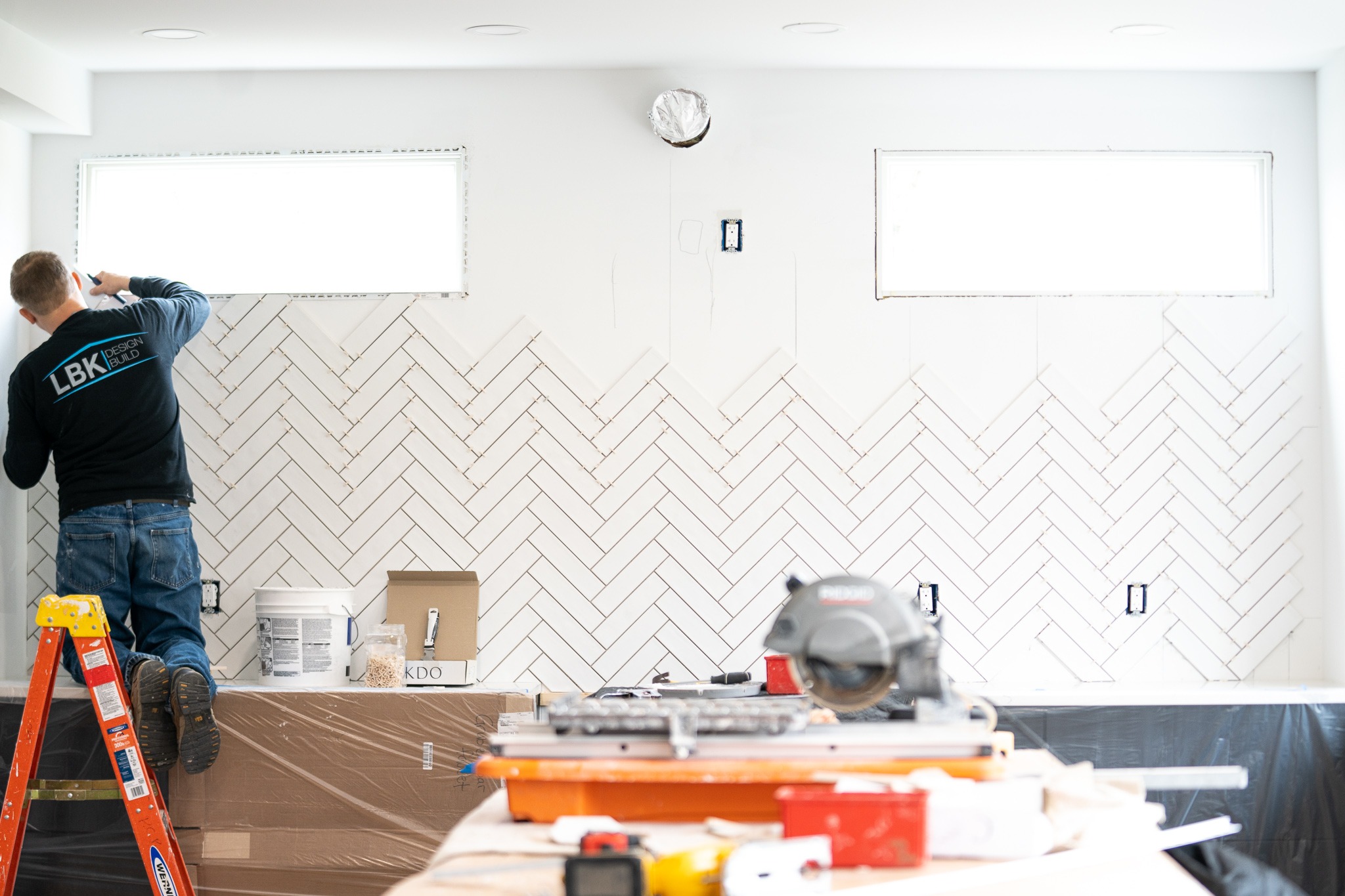
The second is how much a kitchen remodel specifically affects daily life. Homeowners who’ve done bathroom remodels often feel prepared for the category. But a kitchen remodel changes how a household eats, shops, and moves through its mornings in ways that compound over weeks. Setting up a temporary kitchen — a countertop with a microwave and a coffee maker, a designated place for the things you reach for every day — matters more than it sounds. So does a realistic plan for how you’ll handle dinner on an average weeknight.
The third is the way the house amplifies sound differently once walls are opened. What was a contained noise becomes whole-house noise. Families with young children or anyone working from home during the day will want a clear plan established before demo begins for where focus work happens, where children do homework, and how the household’s quietest hours get protected.
How to Set Your Household Up Before Construction Starts
The most useful preparation happens well before the first crew arrives in the planning phase, when there’s still room to think clearly and act without pressure.
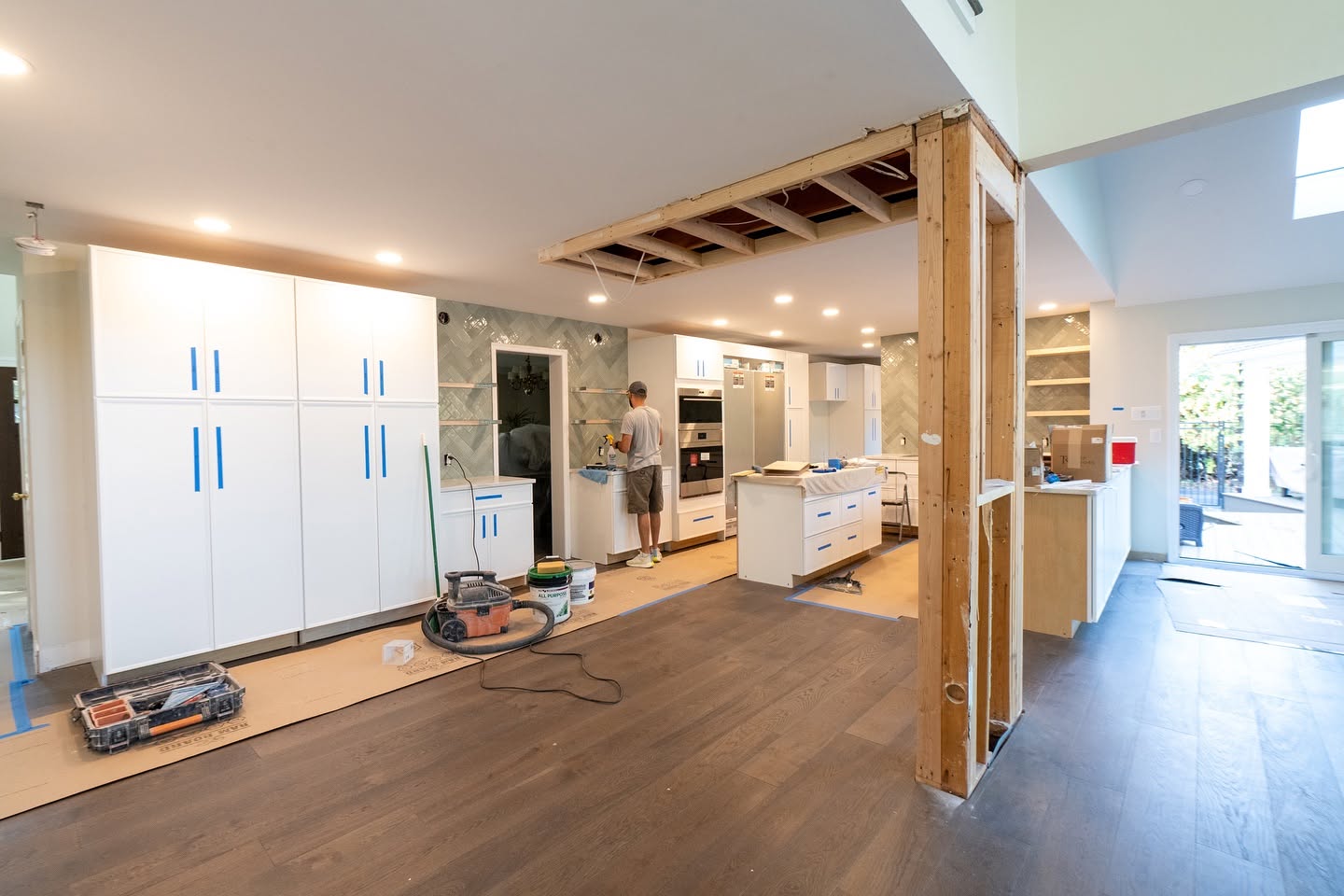
Start with the spaces directly adjacent to the work zone. Anything valuable, fragile, or difficult to clean should be moved well out of the construction area before demo begins, not during it. Dust travels further than most homeowners expect, even when barriers are in place. Books, artwork, electronics, and anything with sentimental value are worth relocating to rooms that will be fully sealed off from the work.
Establish a household base of operations. Identify which rooms will remain reliably functional — a bedroom, a bathroom, a sitting area — and let those anchor daily life for the duration of the project. The goal isn’t to pretend the remodel isn’t happening. It’s to create enough structure that the disruption has limits, and that there are spaces in the house where things feel normal.




Build a communication rhythm with your project team early. Know how questions get answered, how schedule changes get communicated, and what the process is if something needs to be decided quickly.
At LBK, homeowners have direct access to their project manager and real-time visibility into schedules and decisions through project management software, which turns out to be one of the most meaningful sources of calm during an inherently unsettling process. Knowing what’s happening and what’s coming next is genuinely different from wondering.
The LBK Way: Livable Remodeling
There’s a difference between a remodel that is merely completed and one that is well-managed, and homeowners feel that difference every day they’re living through it.
A well-run project has a crew that arrives when they say they will, works a predictable schedule, and leaves the site secured and reasonably clean at the end of each day. It has a project manager who raises issues before they become problems, not after. It has a design team whose drawings were thorough enough that field surprises are the exception rather than the rule. And it has a homeowner who was genuinely prepared — not sold a version of the process that was more comfortable than accurate.
This is the philosophy behind what LBK calls livable remodeling. The approach isn’t built on the premise that remodeling is easy, or that disruption can be eliminated entirely. It’s built on the premise that disruption can be managed with smart zoning that isolates construction from the rest of the home, with scheduling discipline that keeps the project moving rather than stalling in the middle, and with communication that keeps homeowners informed rather than anxious.
The families who tell us afterward that the process was better than they expected are almost always the ones who were told the truth going in: that there will be some disruption of the usual routine, but with the right preparation and the right team, it’s entirely livable.
Going in Prepared
The goal of any remodel is the finished room, but the quality of the experience getting there matters too. A project that leaves a family exhausted and frayed at the edges produces a different relationship with the finished space than one that was difficult in the expected ways and manageable throughout.

At LBK Design Build, we talk with every client about what living through their specific project will be like before construction begins because we believe a prepared homeowner is a calmer one, and a and a calmer homeowner leads to a stronger finished product.
If you’re beginning to plan a remodel in Bucks County, Montgomery County, or the surrounding region, we’d welcome that conversation.